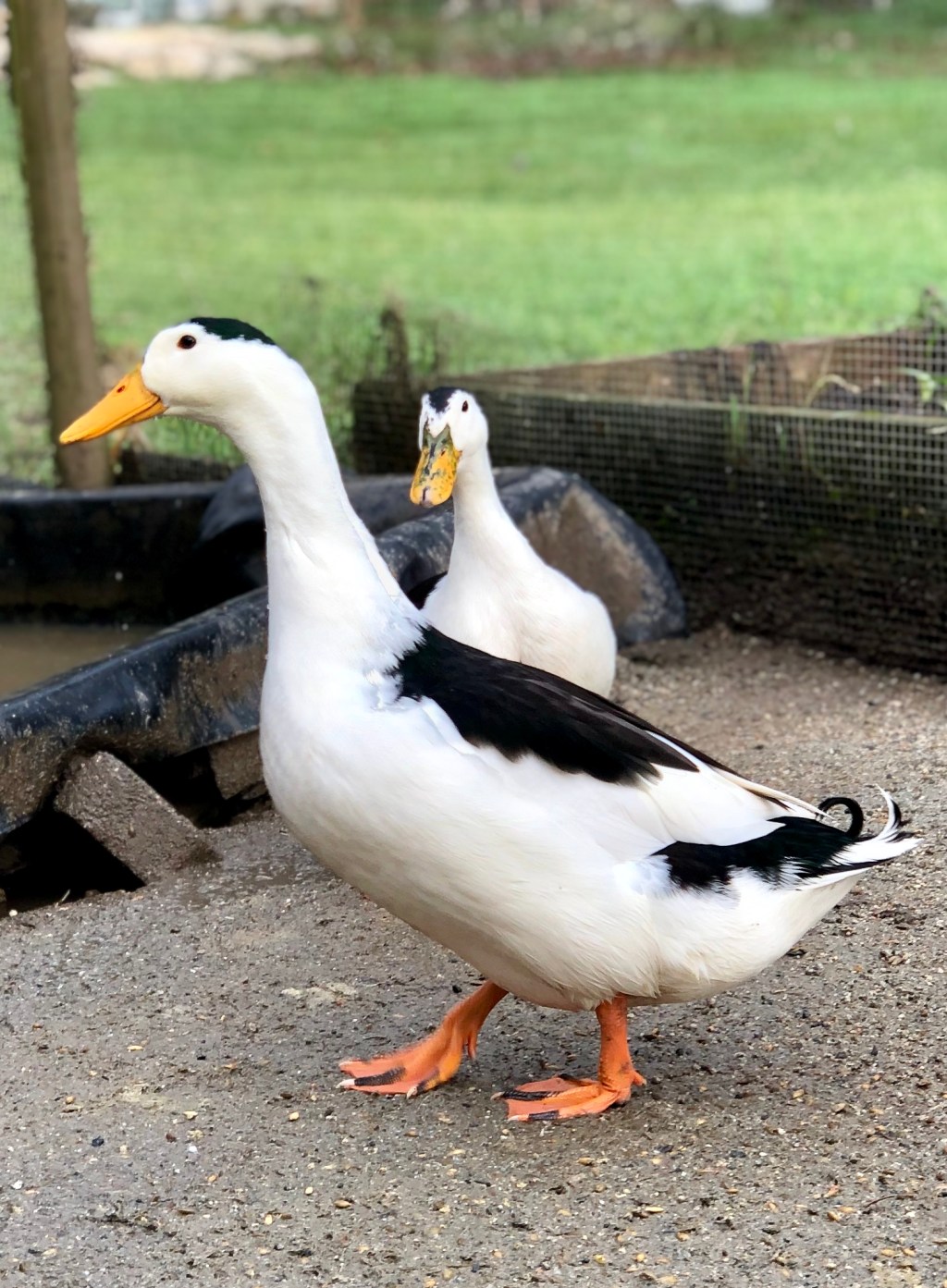
I have been raising Magpie ducks for easily over 10 years and have exhibited them across western Canada. I am definitely always learning more about this breed and fine tuning my practices, but I have gained some knowledge over the years that I think other breeders or people interested in Magpie ducks may benefit from. These tips come from my own personal experiences, but there might be other methods or solutions that achieve the same results.
Selecting Breeding Birds
Developing a breeding program for Magpie ducks can be quite difficult as there are many variations in colouring that can occur, no matter the quality of your breeding pen. The basic principles of focusing on type before colour (building the barn before painting it) and choosing birds that compliment each other and don’t have the same faults, are true to breeding Magpie ducks also. The nuance of the breed comes from understanding the genetics or background of your ducks, and how they pass on traits to their offspring. It takes time, seasons of breeding and some trial and error to learn which breeding combinations work and which do not. Just putting two well-marked Magpie ducks together for breeding does not mean you will get well-marked offspring!
I prefer to breed my ducks in groups of 5-6 birds as this helps reduce the stress on the females since male Magpie ducks are very vigorous breeders. One of my goals over the years of breeding Magpie ducks has been to raise the whole quality of my breeding flock in order to reduce the number of poorly marked ducklings hatched. I have been aiming for consistency and high quality in my flock, rather than having some high quality and some with less desirable traits. As well, I have kept note of which birds produce well-marked offspring as, although some ducks may themselves appear well-marked, they might have the tendency to produce poorly marked offspring more frequently. It has taken time, but I have noticed a reduction in poorly marked ducklings in more recent years. This approach has been beneficial for me as I can now put breeding groups together and know that the quality of my birds is at a level which will produce quality offspring.
Challenges with the Breed
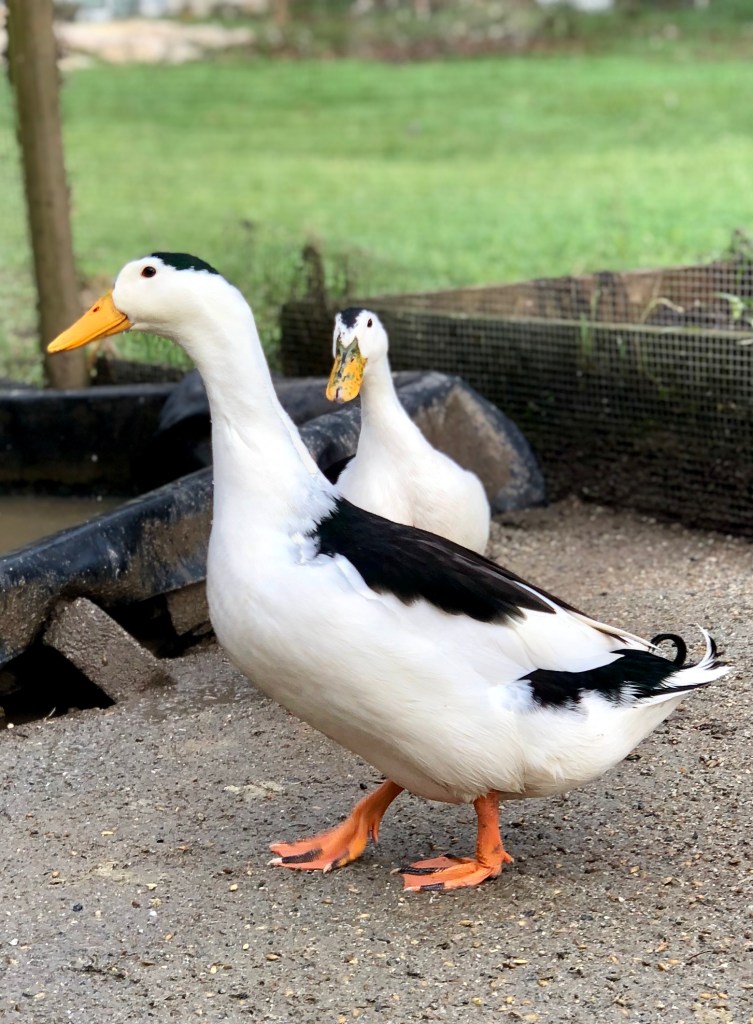
The biggest challenge with Magpie ducks is getting crisp and well-defined markings on the birds, whether it be their back, cap, or rear/tail. But, that is one of the qualities that makes working with them so fun!
One challenge I have struggled with in my breeding flock of Magpie ducks is the back colouring. I made the choice one year to keep a male that had great type, a great cap but the markings on his back were uneven with one side having black only half way down the back and the other side having black the whole way down. It is the difference of just one or two feathers but with a black and white bird this issue is very obvious! What I didn’t know when choosing to keep that male, was how hard that trait was to breed out. This became a multi-year challenge to raise quality drakes that had even colour on their back again.
Another challenge I have faced, which may be specific to Canada, is finding exhibition quality breeders of Magpie ducks to get new birds from. The foundation of my flock came from Holderread Waterfowl Farm, but it has been a challenge to find other breeders in Canada that are breeding Magpie ducks to the APA Standard of Perfection.

Hatching and Incubating
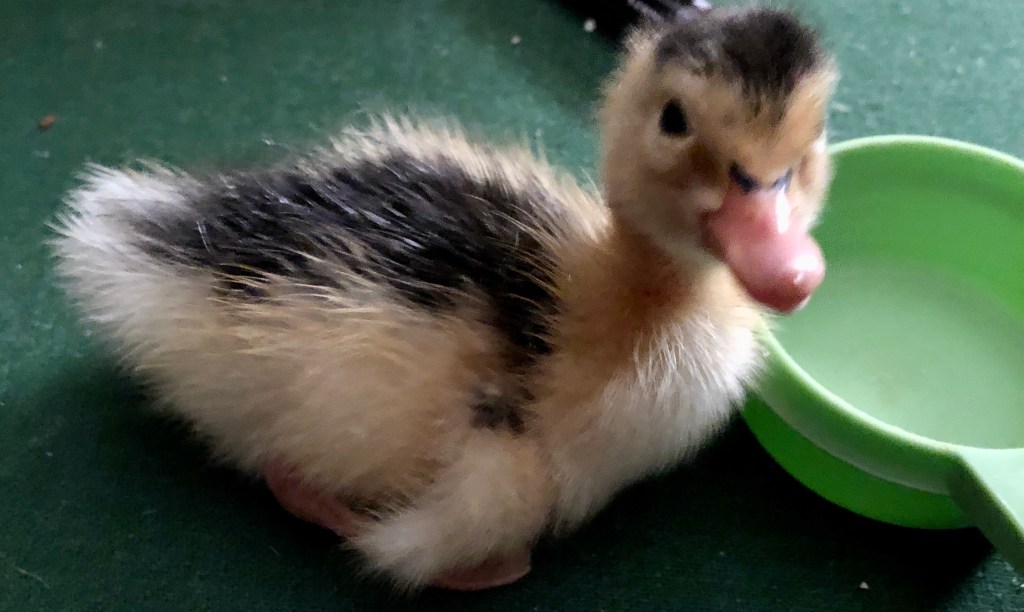
I have done both natural and artificial incubation with my Magpie ducks over the years. As most breeds, some of the females are great natural mothers whereas others do not have that quality! I usually try to wrap up my breeding season by giving the females the choice to sit on a clutch of eggs and raise their own ducklings. Those that do choose to incubate and raise their own young are phenomenal mothers, from my experience. There is something special about watching ducks hatch and raise their young!
Magpie duck eggs artificially incubate fairly well, from my experience. I have had challenges with them at the hatching stage and sometimes they require assistance. My favourite incubator for them has been my trusty Genesis Hovabator, and then I use a Brinsea octagon 40 for hatching them in. I like the Brinsea for hatching as it has a humidity pump which makes keeping the humidity high much easier, and cleaning it between hatches is quite simple. I have tried eggs in my Brinsea cabinet incubator, but I don’t get the same success rate as when I use the Genesis Hovabator.
Feeding
Feeding Magpie ducks is fairly simple and similar to other domestic ducks, from my perspective. For my adult birds, they get a mixture of flattened oats and prepared ration throughout the year with the ratio changing as the birds’ needs change. To help with laying/breeding and to prepare for winter they usually get 60-70% prepared ration and 30-40% flattened oats, but during the summer and show season it is usually 50-50 or sometimes a bit higher amount of oats if they are a bit plump still from the winter or breeding season.
Something Magpie ducks really thrive with is access to pasture space. They love working a field and eating grass and bugs, and playing in puddles! If you are able to let them graze, the amount of prepared feed they consume will dramatically drop. With my flock, I can only let them out to pasture when I am in the yard due to predator problems, but nonetheless it is probably their favourite part of the day! I have raised other domestic duck breeds, and none of them have enjoyed grazing or been as active of foragers as Magpie ducks.
These are just some of the insights and tips that I have learned over my time raising Magpie ducks, and other breeders may have different opinions or other ways of raising this breed. I look forward to raising this breed for many years to come still and to continue honing my skill and knowledge of the breed.
~ Matthew ~
 Poultry Pages
2 responses to “Magpie Ducks: Tips of Success”
hello, my name is Tracy Jones, could you please be more specific on the type of oats and food you feed your magpie.
thank you.
Jonesandstolen0314@gmail.com
LikeLike
Hi Tracy, thanks for the question! I feed my Magpie ducks 18% layer pellets and mix in flattened oats, when they are available. That is what I have easily available to me in my area (British Columbia, Canada).
LikeLike